

The CONTRARIAN Protocol
How to Buy When Everyone Is Selling (and Be Right)
For the trader who knows the rules and still loses
In March 2009, the S&P 500 hit its lowest level in over a decade. Every signal said buy. Almost nobody did.
The average equity investor earned 3.6% per year over the next 30 years while the index returned 10.6%. The gap wasn't caused by bad stock picks. It was caused by selling at the bottom and buying at the top.
On a $100,000 portfolio, that behavioral gap costs $1.7 million over 30 years. Not a theoretical number. A measured one.
The investors who made fortunes during panics didn't have better information. They had a system that overrode the instinct to run. Soros shorted the pound when every finance minister said the peg would hold. Buffett bought American Express when Wall Street was unanimous: sell. Einhorn shorted Lehman while the SEC investigated HIM.
Each of them followed a protocol. This guide builds yours.
13 chapters. ~10,000 words. A five-step system for identifying panics, diagnosing opportunities, and sizing bets when your brain is screaming to do nothing.
This is not a retelling of famous trades. It is 25 sources cross-referenced, so a 1970s intuitive trader and a quant coding today end up proving the same rule from opposite directions. Those connections exist nowhere else.
Futures, stocks, or crypto. Two months in or ten years deep. If you know what buying and selling means, this is built for you. It is not about picking better trades. It is about the system that keeps you in the game long enough to win.
What you get today
- 📕
The guide, 13 chapters, ~55 pages
Read it online in a clean reader. No PDF to download, no app to install. Works on any device.
- 🎧
Audio version of the guideFREE
Full narration. Listen while you commute, work out, or trade.
- 📈
TradingView indicator — the OS CockpitFREE
Robust stop, position sizing, drawdown guardian. Open-source, copy-paste.
⚡ Instant access the moment you pay. Yours forever.
Why $39? It is the launch price, and it goes to $79 when the timer ends. No subscription, no catch. The guide is yours the moment you pay.
Launch price — ends in
Includes free: audio version · TradingView indicator · printable checklist
13 chapters · Instant access · Yours forever · $79 when the timer ends
🛡️ 14-day money-back guarantee · Read Chapter 1 free first
The Legends Behind This Guide
Built from 3 investor playbooks
Every principle traced to a specific trader. Every claim sourced.

George Soros
Made $1B in a single day breaking the Bank of England

Warren Buffett
Compounded $10K into $150B with patience
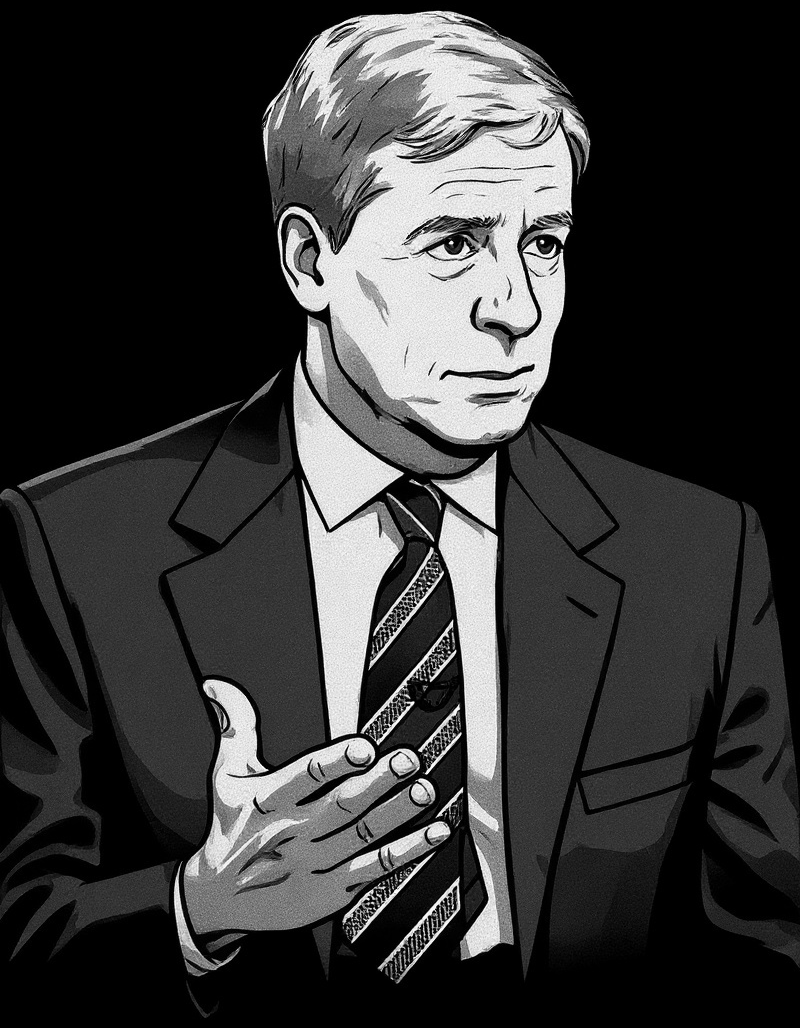
Stanley Druckenmiller
30% annual returns for 30 years, no losing year
Inside the guide
What you'll learn, chapter by chapter
Chapter 1 — The Billion-Dollar Bet Against a Central Bank
George Soros bet $10 billion against the Bank of England on a single day in September 1992. The British government raised interest rates twice in hours. It didn't matter. He made over $1 billion before nightfall.
The instruction Soros gave his chief strategist when told the position was already massive enough (and why most investors would have done the exact opposite)
Why this wasn't a gamble but an exercise in arithmetic: the specific asymmetry that made the downside survivable and the upside enormous
The same pattern repeated three times since 1992 — Swiss franc in 2015, Japanese yen in 2022 — and each time the consensus said it couldn't happen
Chapter 2 — Why Your Brain Won't Let You Buy the Dip
David Dreman tracked the cheapest 20% of stocks against the most expensive 20% for four decades. The cheap stocks outperformed by 4-5% per year. The outperformance existed BECAUSE they were painful to own.
The neurological reason you sell at the bottom: the fear signal arrives at your brain BEFORE the analytical signal. By the time logic catches up, the sell order is placed.
Why Dreman's answer was NOT willpower — he built mechanical rules that force the right action regardless of how the investor feels (and why that distinction is the difference between theory and profit)
Chapter 3 — The Pendulum
Howard Marks has written memos for over three decades. One image dominates: the pendulum that never stops in the middle. In March 2020, it swung from total panic to all-time highs in nine months.
Why the best time to invest feels like the worst time to be alive — when VIX is above 40 and bears outnumber bulls two to one, the pendulum is at an extreme that historically reverses
The five prerequisites Marks lists for contrarian action — the last one sounds like a joke but without it, most investors abandon the process within weeks
Why past performance does NOT predict future returns but absolutely predicts future psychology (and how to exploit the gap)
Chapter 4 — Five Signals That a Panic Is a Buying Opportunity
Five independent, measurable indicators — drawn from the research of Dreman, Montier, and three decades of market data — that have identified EVERY major buying opportunity of the last 30 years when triggered simultaneously.
In March 2009, all five indicators hit extreme levels. The S&P returned 68% over the following 12 months. In March 2020, same pattern. The S&P returned 75%.
In October 2022, only three of five triggered. The subsequent rally was real but more modest at 21%. The system doesn't just identify opportunities — it grades their intensity.
One of the five signals measures something most investors never check: the speed at which leveraged investors are being FORCED to sell, regardless of fundamentals
The binary scoring system that replaces "I think the market is oversold" with a specific number between 0 and 5
Chapter 5 — The Salad Oil Scandal
Warren Buffett put 25% of his assets into a single stock that Wall Street unanimously said to sell. American Express had just lost $150 million in a fraud involving fake soybean oil. The stock was down 50%.
Buffett's diagnostic method: he didn't read analyst reports. He went to restaurants in Omaha and watched what people paid with. The answer told him everything Wall Street's models couldn't.
The four-question framework that separates a temporary wound from a fatal injury — applicable to ANY stock that has just crashed on bad news
Chapter 6 — The Man Who Shorted Lehman
David Einhorn published his analysis of Lehman Brothers a year before it collapsed. The CEO wanted to "hurt him bad." The SEC investigated HIM. They found nothing. Because his only tool was a calculator and public filings.
The specific red flag Einhorn found: a gap between reported numbers and underlying asset values so large that basic arithmetic invalidated Lehman's financial statements
Why 18 months of being "wrong" is the real cost of contrarian investing — the trade was correct from day one, but the market didn't agree for over a year
The institutional resistance pattern that repeats every time an outsider challenges a consensus: attack the analyst, not the analysis
Launch price — ends in
Includes free: audio version · TradingView indicator · printable checklist
13 chapters · Instant access · Yours forever · $79 when the timer ends
🛡️ 14-day money-back guarantee · Read Chapter 1 free first
Plus 7 more chapters. Tap any to open.
Chapter 7 — Buying Banks When Nobody Will▾
Wells Fargo in 1990 traded at a P/E of 3.7. It had been profitable every single year since 1852, including during the Great Depression. Buffett bought at book value. The investment returned over 10x.
In September 2008, Buffett called Goldman Sachs and offered $5 billion during the worst financial crisis in 80 years. The terms he negotiated generated over $3 billion in profit on the warrants alone.
The structural reason banking crises produce the BEST contrarian opportunities: the same leverage that makes banks dangerous on the way down makes them extraordinarily profitable on the way up
Chapter 8 — The Timing Problem▾
David Dreman spent decades proving that cheap stocks outperform — but also that they can underperform for months or years BEFORE reverting. The timing problem is real, and most contrarians quit before the payoff arrives.
If you missed the 10 best days in the S&P 500 between 1990 and 2020, your return dropped from 9.9% to 5.6%. Miss the best 20 days, and it dropped to 2.9%. The best days almost always occur during the WORST periods.
An investor who bought the day Lehman collapsed was down another 45% before turning profitable a year later. An investor who bought six months later looked like a genius. Both had the same thesis.
Why Dreman's answer was not better prediction — it was a process that functions regardless of when the bottom arrives. Three mechanisms that contain the timing problem without solving it.
Chapter 9 — The Epidemic Model▾
Fund managers who work in the same city buy the same stocks — not the same type of stocks, the same specific stocks. A landmark study of thousands of mutual funds proved that stock ideas spread like diseases through professional networks.
Why this means prices at extremes are driven by social contagion, not fundamental analysis — and why the contrarian who ignores the social signal has a structural edge
The reason contrarian investing is difficult to scale: if a contrarian fund gets famous enough, the herd follows the contrarian, and the edge disappears
Chapter 10 — How to Size a Contrarian Bet▾
Stanley Druckenmiller went 30 consecutive years without a losing year. His core principle: the size of the position should match the strength of the conviction. Most investors do the exact opposite.
The lesson Soros taught him about sizing — and the $3 billion Druckenmiller lost in six weeks when he abandoned Soros's principle during the dot-com bubble
The four-level sizing framework that links position size to the panic score: from watchlist at 0% to maximum conviction at a specific percentage that you would NOT guess
Why the maximum loss framework matters MORE than the entry price: a single oversized contrarian bet can end a career even when the thesis is correct
Chapter 11 — The Five-Year Rule▾
James Montier compiled data across global markets on cheap stocks that stay cheap. He categorized them into three groups. Two of the three categories recover. One never does. The contrarian who can't tell the difference loses everything.
John Templeton's screening method for bargains: study the worst performers of the past five years, then answer ONE question that determines whether you buy or walk away
Kodak was "cheap" at every stage of its decline from 2005 to 2012. It was also worthless. No amount of patience would have saved that investment. This chapter explains how to spot the difference BEFORE buying.
The four-item diagnostic checklist that separates temporary wounds from permanent injuries — applicable to any stock, sector, or market that has declined for an extended period
Why being contrarian and being stubborn look identical from the outside — and the specific analytical test that tells you which one you're being
Chapter 12 — The Protocol in Action▾
March 2020: all five panic signals triggered simultaneously. This chapter applies every tool from the previous eleven chapters to the COVID crash, step by step, in real time.
Three specific stocks passed the diagnostic framework. One was rejected despite being down 80%, because it failed a single criterion. The twelve-month returns on the three selected positions ranged from 69% to 100%.
The protocol did not predict the bottom. It did not require knowing the exact day. It required five signals, a diagnosis, a sizing framework, and the discipline to hold for twelve months.
Chapter 13 — The Cost of Waiting▾
The average investor earned $290,000 on a $100,000 portfolio over 30 years. The index returned $2 million. Same capital. Same market. Same time period. The only variable was behavior — the same herding and loss aversion Dreman documented for four decades.
Waiting for certainty is the most expensive decision in investing. By the time the recovery is obvious, most of the recovery has already happened. The investor who waited for "safety" in 2009 captured perhaps 20% of what the protocol investor captured.
James Montier's research across global markets confirms: the 7% annual gap is not evenly distributed. Most of it comes from a handful of critical moments where the investor sold during a panic or sat in cash during a recovery.
Why the protocol is not complicated but IS emotionally difficult — every step requires doing something that Dreman, Einhorn, and Soros proved works, but that feels wrong every single time
You've seen what happens when investors follow their instincts during a crash. They sell at the bottom, wait for safety, and miss the recovery. The measured cost is $1.7 million on a $100,000 portfolio over 30 years.
This guide gives you a five-step protocol tested by investors who deployed billions during the worst moments in market history. Soros, Buffett, Druckenmiller, Einhorn, Dreman. Not theory. Documented trades, documented returns, documented failures.
13 chapters. ~10,000 words. One protocol you can activate the NEXT time the market panics.
No predictions required. No market timing. Just five measurable signals, a diagnostic framework, and a sizing system that replaces panic with process.
Who is behind this
We are Investors Decoded, a small team of traders and researchers.
One obsession: how the legends actually operated, not the myth. We go to the source, their own words and their own records, and we trace every rule back to the trader who paid for it with real money.
The edge is not a hot take. It is the connection no one else has made, traced to the primary record and checked line by line against the original. Every quote real, every number verified. No invention.
These guides are what we wish someone had handed us on day one.
Launch price — ends in
Everything you get today
- 📕The CONTRARIAN Protocol$79 value
13 chapters. Every rule traced to a real trader.
- 🎧Audio version of the guideBonus$9FREE
Full narration. Listen while you commute, work out, or trade.
- 📈TradingView indicator — the OS CockpitBonus$29FREE
Robust stop, position sizing, drawdown guardian. Open-source, copy-paste.
13 chapters · Instant access · Yours forever · $79 when the timer ends
🛡️ 14-day money-back guarantee