

The Trader's OPERATING SYSTEM
The 5-Component Framework That Separates the 10% Who Profit From the 90% Who Don't
For the trader who knows the rules and still loses
You know more about trading than the 23 strangers Richard Dennis pulled off the street in 1983. A card player, a filmmaker, a security guard. They learned for two weeks. Then one of them earned three times more than the others, using the exact same rules.
The difference was not knowledge. It was not talent. It was not the system. It was the operating system around the system.
Every legendary trader operates on the same 5 components. Remove any one and the whole thing falls apart.
This guide installs the OS. Five components. Cross-referenced across 25 primary sources, from research papers to first-hand accounts, that no single one connects. Every principle traced to a specific catastrophe by a specific trader. Every cross-reference verified against the original record.
18 chapters. One system. Implement it on your next trade.
This is not a retelling of famous trades. It is 25 sources cross-referenced, so a 1970s intuitive trader and a quant coding today end up proving the same rule from opposite directions. Those connections exist nowhere else.
Futures, stocks, or crypto. Two months in or ten years deep. If you know what buying and selling means, this is built for you. It is not about picking better trades. It is about the system that keeps you in the game long enough to win.
You know the feeling. The stop you should have taken, moved one more time. The account you rebuilt, handed back in a week. It was never that you did not know better. It is that in the moment, nothing held you to the plan. That missing thing has a name, and it is what you install here.
How the legends operate
The 5 components of the operating system
Every legendary trader runs all five. Remove one and the whole thing falls apart. This is the guide, on one page.
By the last chapter it all fits on one page, plus three things to do on your very next trade.
Pre-trade checklist
Before I click buy
- ✓My rule for this trade fits on one line
- ✓My position size is calculated, not guessed
- ✓I know exactly where I get out
- ✓I am not chasing a loss
- ✓This still works if I am wrong
Included free. Print it, keep it by your screen.
What you get today
- 📕
The guide, 18 chapters, ~55 pages
Read it online in a clean reader. No PDF to download, no app to install. Works on any device.
- 🎧
Audio version of the guideFREE
Full narration. Listen while you commute, work out, or trade.
- 📈
TradingView indicator — the OS CockpitFREE
Robust stop, position sizing, drawdown guardian. Open-source, copy-paste.
- ✅
Printable pre-trade checklistFREE
The 5-component checklist. Print it, keep it by your screen.
⚡ Instant access the moment you pay. Yours forever.
Why $7? It is the launch price, and it goes to $79 when the timer ends. No subscription, no catch. The guide is yours the moment you pay.
Launch price — ends in
Includes free: audio version · TradingView indicator · printable checklist
18 chapters · Instant access · Yours forever · $79 when the timer ends
🛡️ 14-day money-back guarantee · Read Chapter 1 free first
The Legends Behind This Guide
Built from 11 investor playbooks
Every principle traced to a specific trader. Every claim sourced.

Richard Dennis
Trained 23 strangers to trade — 19-year-old made the most

Michael Marcus
Turned $30K into $80M after losing his mother's $20K

LTCM
Two Nobel laureates lost $4.6B in four months

Walter Schloss
16% annual returns for 47 years from one room

George Soros
Made $1B in a single day breaking the Bank of England

Ed Seykota
Turned $5,000 into $15 million

Victor Niederhoffer
Soros-backed PhD who blew up twice with the same mistake

Curtis Faith
The youngest Turtle who outperformed them all

Jesse Livermore
Made $100M shorting the 1929 crash

Warren Buffett
Compounded $10K into $150B with patience
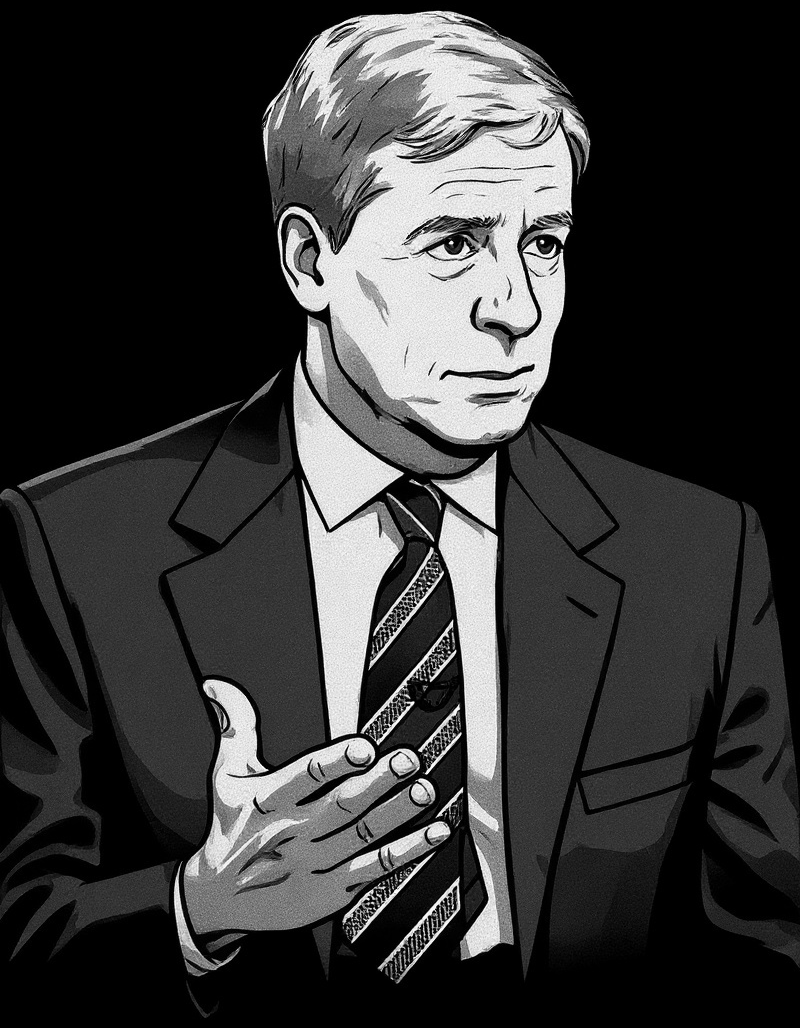
Stanley Druckenmiller
30% annual returns for 30 years, no losing year
Why a system beats a better prediction
Lose 50% and you do not need a 50% gain to get back. You need 100%. The math does not forgive, and it is why a single bad trade can undo ten good ones.
The traders in this guide did not win by predicting better. They won by never taking the loss that needs 300% to undo. That is what the operating system protects: your ability to still be here next year, compounding, while others start over.
Inside the guide
What you'll learn, chapter by chapter
Chapter 1 — You Don't Have a Trading Problem
Why Jesse Livermore went bankrupt multiple times despite knowing the rules better than anyone alive — and the one sentence he wrote in 1923 that still describes 90% of trading failures today
The finance professor who tracked 66,000 households for 5 years and proved that the more they traded, the worse they did. The exact figure: 6.5 percentage points lost per year, every year, by the most active accounts
The two specific mechanisms Livermore described in 1923 and Odean measured with data in 2000 — same conclusion, 77 years apart, sample size went from one to sixty-six thousand
The 35-40% win rate system William Eckhardt designed that beat traders with 70% win rates. Why losing most trades is the only way to make money long-term
What turns a $100,000 account into less than half of what doing nothing would have produced — silently, over two decades, without a single crash
Chapter 2 — What a Blackjack Player, a Filmmaker, and an Accountant Have in Common
A 19-year-old with zero experience earned three times more than the other trainees. Same rules. Same signals. Same sizing formula. The full breakdown of why
The exact answer Curtis Faith gave when Dennis asked how many things he knew about commodities trading — and why it got him hired on the spot
The trading psychologist who nearly became a Turtle and later concluded: "the systems they used are nothing special." What he says actually mattered
Liz Cheval's 100% trade in 1990 — and the gut-wrenching detail about how 50% profits could evaporate overnight that made other Turtles quit
Chapter 3 — Why the Genius With the PhD Blew Up and the Minimalist Got Rich
A PhD from the University of Chicago, national squash champion, backed by Soros. He blew up. Twice. The same mistake both times — and you're probably making it right now
The investor with one room, no computer, no employees, and one rule who compounded 15.3% per year for 47 years. Every dollar grew to $662
Warren Buffett featured him in his 1984 essay as proof that simplicity works — chosen over every flashier operator on Wall Street
What LTCM's two Nobel laureates did one year before losing nearly everything. They returned $2.7 billion to investors because they had "excess capital."
Chapter 4 — The Four-Element Test
A former AHL portfolio manager (billions under management) proved mathematically why every parameter you add increases the probability of failure
The exact calculation that destroys most quant strategies: 5 parameters with 10 values each = 10,000 combinations. At least one will look perfect by pure chance
What Daniel Kahneman wrote about experts vs simple algorithms — and why he concluded complexity actively reduces accuracy
The four elements of any viable trading system. If you cannot fit them on one page, you are building a vulnerability, not a system
Chapter 5 — The Most Dangerous Lie in Trading
"You can't go broke taking profits." The sentence that sounds like wisdom and costs traders more money than any single mistake
Stanley Druckenmiller's 12-year observation of George Soros that destroys what every trader thinks is the secret. His exact quote: "His view on the yen or the euro was barely better than random."
The Nobel laureate who studied poker players at Cornell and identified why losing traders draw to inside straights. The mechanism repeats in your account every week
The "house money effect" that explains why winning streaks always end in giveback — and the one calculation that tells you whether your strategy actually works
The single number that matters more than win rate, more than entry timing, more than anything else. Most traders have never calculated it
Chapter 6 — Position Sizing Matters More Than Your Entry
Same system. Same signals. Same stocks. Returns varied from $32,567 to $2,109,266. The only variable was position sizing
The Cornell student who turned $12,000 into $250,000 trading options from his dorm — and lost it all in a single overleveraged trade
"We don't trade markets, we trade money." The fund manager who averaged 30% per year for seven years with under 1% worst-case loss
The coffee trader who lost $100 million because he answered the same question five times wrong at dinner. The exact answer Larry Hite gave him each time
Launch price — ends in
Includes free: audio version · TradingView indicator · printable checklist
18 chapters · Instant access · Yours forever · $79 when the timer ends
🛡️ 14-day money-back guarantee · Read Chapter 1 free first
Plus 11 more chapters. Tap any to open.
Chapter 7 — The Rule That Lets You Be Wrong 20 Times in a Row▾
A trader lost his mother's $20,000 because he couldn't press the sell button. The rule he created from that catastrophe made him $80 million
The recovery math table every trader should memorize: lose 40%, need 67% to recover. Lose 50%, need 100%. Lose 75%, need 300%. The numbers do not negotiate
"That is the only way I can sleep." The trader who never enters a position without knowing where he'll get out — and how he turned a $22,000 disaster into Caxton Associates ($14B fund)
The exact percentage that lets you be wrong twenty times in a row and still have 36% of your capital. Most traders use a number that wipes them out after eight
Chapter 8 — Why the Coffee Trader Lost $100 Million▾
One of the world's largest physical coffee traders. He knew where the boats were, knew the ministers. He asked the same question five times at dinner
The 7-year investigation into 3,000 years of risk that explains why humans consistently underestimate tail events — from Pascal in 1654 to your trading account today
"I just look at the risk." Five times the same answer. Three months later, $100 million gone — and the bridge engineer principle that would have saved him
Chapter 9 — Your Brain Is Designed to Lose Money▾
The neuroscientist who quit Wall Street, retrained at Cambridge, and proved with blood samples that winning streaks make traders chemically reckless
The MIT professor who measured traders' emotions in real time and found that the profitable zone is a narrow emotional band — and what happens at both extremes
The trader who wakes up every morning assuming he's wrong about everything. Not insecurity. Engineering. The exact daily ritual he uses
The "winner effect" documented in animal studies that repeats identically on trading floors. Why your biggest losses always come AFTER your biggest wins
The one question to ask yourself before every trade. If the answer is one of four words, do not click buy
Chapter 10 — The Pain of Missing a Trade Is Worse Than Losing Money▾
A trader lost $750,000 and felt RELIEVED. The psychological mechanism that guarantees FOMO produces the worst possible timing
The researcher who studied soccer goalkeepers during penalty kicks — and discovered why doing nothing feels worse than doing the wrong thing 94% of the time
The lab experiment where participants formed bubbles out of pure boredom. No greater fool. Just the inability to sit still
The thorazine story — a Market Wizard who took an antipsychotic to cope with watching a trade he had exited continue going up
Chapter 11 — The Ten-Year Losing Streak▾
He sat in a graveyard in his blue smock in front of Alexander Hamilton's grave, wondering how anybody so smart could get so screwed up
The trading psychologist who identified the three signs that the problem is the trader, not the system. Run them against your last 20 trades
Same person. Same brain. Same markets. Different method. $5,000 to $140,000. Then $40,000 to $20 million. The exact moment of the switch
The U.S. Trading Championship record — 9 entries, 9 times winning more than all other contestants combined. Average return: 210%. Maximum monthly drawdown: 3%.
Chapter 12 — The System That Made $200M Then Destroyed Its Creator▾
The system was STILL working when its creator drew down 55% and shut everything down. What broke was not the system
The 40-year veteran of trading system research who formalized why profitability and robustness are in tension. The exact tradeoff every system faces
The one variable the Turtles who survived adjusted that Dennis did not. Same rules. Same markets. Different outcome
The three monthly questions that tell you whether you're in a normal drawdown or facing a regime change. If you cannot answer them, you cannot tell the difference
Chapter 13 — When to Change Your System (And When to Change Yourself)▾
Five years of losses. Never quit. His reinforcement came from watching the losses get smaller each year
The institutional method that tells you whether your system is dead or temporarily misaligned. Most retail traders have never heard of it
"Think of each trade as one of the next one thousand." The trader Schwager called "Mr. Serenity" after a 15% overnight loss in the 1991 Iraq war
The single missed trade worth $30,000 per contract that taught one trader the rule he never broke again — even when it cost him $400K in a single week
Chapter 14 — The 40% Haircut▾
Losing 40% requires a 67% gain just to get back to even. Most investors don't learn this math until after their first crash
The hedge fund manager whose largest drawdown was under 5% while running $37 billion. The exact rule he forces every trader at his fund to follow
The finance professor who formalized the one number every trader should calculate before risking a dollar. Most never do
"Then the elephant walks past you while your gun's not loaded." Why losses cost more than the dollar amount on the screen — and how to engineer around it
Chapter 15 — The Man Who Built a Portfolio for Every Crisis▾
He lost everything on pork bellies and called it "a fantastic learning experience." Then he built a $120 billion fund around one principle
Three centuries of leverage-driven catastrophes documented by a risk historian. The chain is unbroken from the South Sea Bubble to 2008
The three-rule minimum for protecting your capital when everything correlates to 1.0
Why 60/40 is actually 90/10 in risk terms — and the All-Weather alternative that lost single digits in 2008
Chapter 16 — The Correlation Trap▾
Two Nobel laureates. The best risk models in finance. They returned $2.7 billion to investors because they had "excess capital." One year later, they lost everything
The researcher who proved that the stock-bond correlation changes sign across regimes. The negative correlation you rely on is not a law of nature — it broke in 2022
The simple test that tells you whether your portfolio is actually diversified or just holding different names for the same bet
The "25-standard-deviation event" that LTCM's models said couldn't happen — and why it was never an anomaly. It was a regime change disguised as a tail event
The single factor that all "diversified" portfolios respond to in a crisis. When liquidity evaporates, your correlation matrix collapses to one column
Chapters 17-18 — The Complete OS + Install It Monday Morning▾
All 5 components on one page: RULES, RISK, MIND, ADAPT, PROTECT. The specific rule, trigger, and source for each
The position size calculator ready to use on your next trade. Plug in two numbers, get the answer
The pattern that nobody talks about: every trader in this guide blew up BEFORE they became legends. Not one of them succeeded first. The catastrophe was the raw material
Three actions for Monday morning. One page of rules. One sizing check. One emotional pause. That is it
The four starter systems to pick from if you don't have one yet — and the 30-day paper trade protocol that comes before any real money
90% of traders lose. Not because they're stupid. Because they trade without an operating system.
The 23 Turtles had less knowledge than you. They had a system. One of them earned three times more than the others with the same rules. Marcus lost his mother's money before he created his sizing rule. Platt lost 50% before breakfast before he built his $37 billion fund. Every rule in this guide was paid for with real money and real pain.
This is not something you read once and forget. It's an operating system. 5 components, 1 checklist, implement it tomorrow.
18 chapters. ~55 pages. Yours forever. $7 right now.
You'll either trade with an operating system or without one. The results will be different.
Who is behind this
We are Investors Decoded, a small team of traders and researchers.
One obsession: how the legends actually operated, not the myth. We go to the source, their own words and their own records, and we trace every rule back to the trader who paid for it with real money.
The edge is not a hot take. It is the connection no one else has made, traced to the primary record and checked line by line against the original. Every quote real, every number verified. No invention.
These guides are what we wish someone had handed us on day one.
Launch price — ends in
Everything you get today
- 📕The Trader's OPERATING SYSTEM$79 value
18 chapters. Every rule traced to a real trader.
- 🎧Audio version of the guideBonus$9FREE
Full narration. Listen while you commute, work out, or trade.
- 📈TradingView indicator — the OS CockpitBonus$29FREE
Robust stop, position sizing, drawdown guardian. Open-source, copy-paste.
- ✅Printable pre-trade checklistBonus$9FREE
The 5-component checklist. Print it, keep it by your screen.
18 chapters · Instant access · Yours forever · $79 when the timer ends
🛡️ 14-day money-back guarantee